
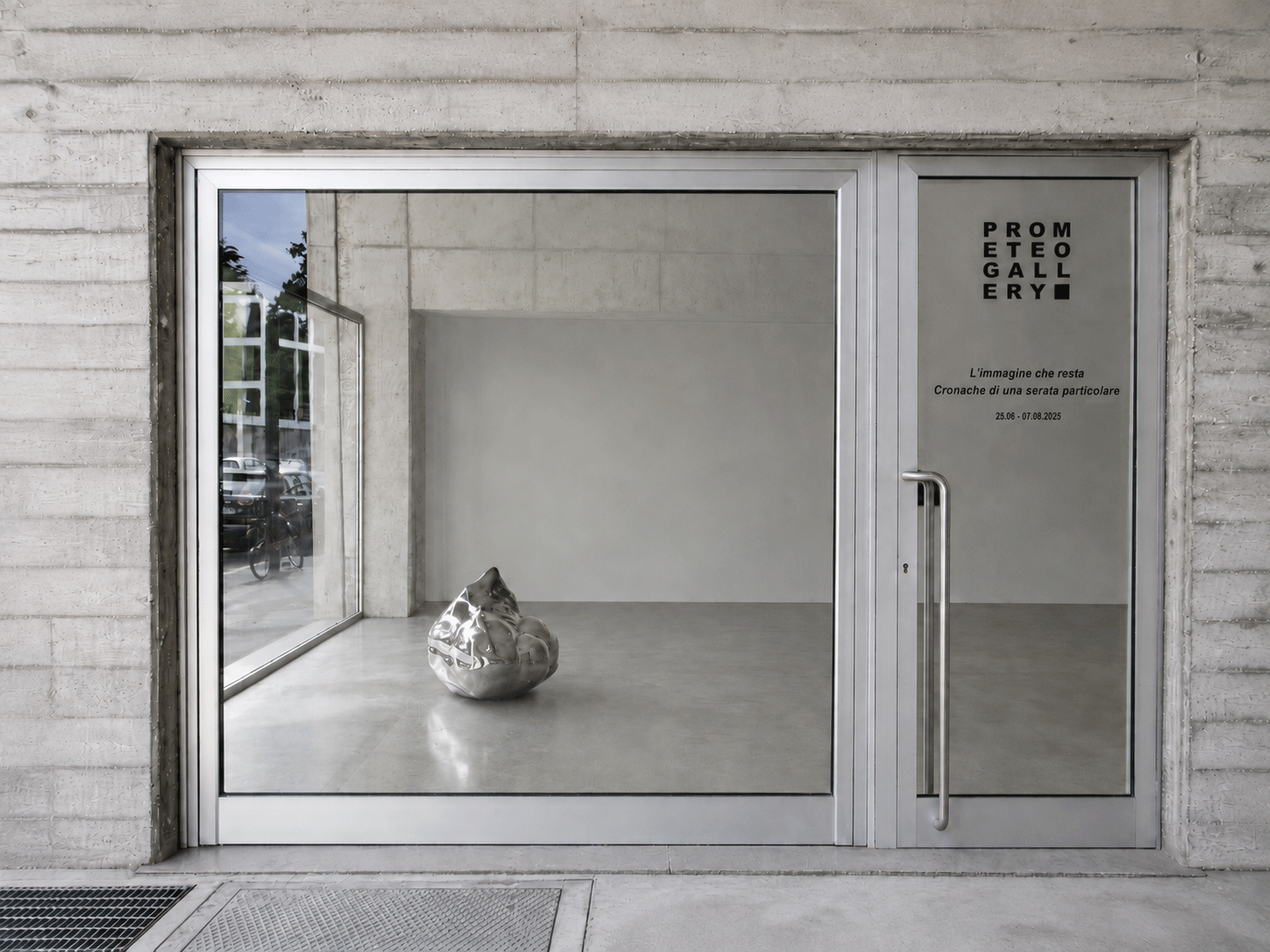
Matteo Mauro’s research was recently presented at Prometeo Gallery in Milan as part of The Image That Remains — Chronicles of a Singular Evening, an exhibition accompanied by a critical text by Domenico de Chirico.
The Image That Remains considered the artwork not as a stable representation of reality, but as a trace of something that has changed, disappeared or become impossible to recover completely. Within the exhibition, the image emerged from the tension between presence and absence, it was a surviving fragment capable of carrying memory beyond the moment or experience from which it originated. This conceptual framework created a particularly relevant context for Matteo Mauro’s sculptures, which repeatedly explore unstable relationships between physical matter, digital processes, historical visual languages and states of transformation.
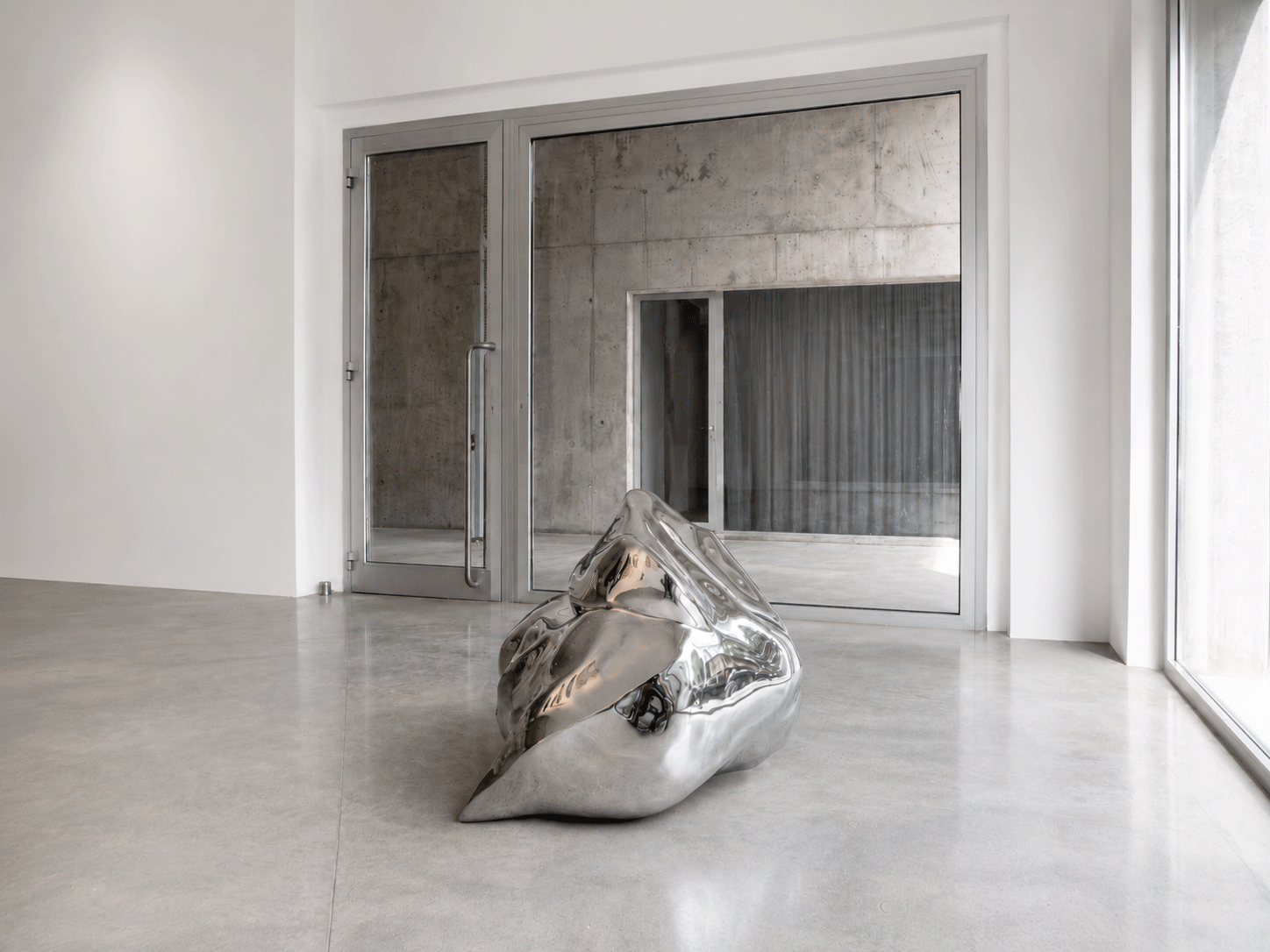
Through this shifting relationship, Steel in Space also responds directly to the conceptual framework of The Image That Remains. The sculpture does not offer one definitive image. Instead, it produces a succession of temporary appearances that emerge, dissolve and re-form as the viewer moves around it. What remains is not a fixed representation, but the memory of an encounter with matter in continuous perceptual transformation. Within the exhibition, the artwork exemplified Domenico de Chirico’s description of Mauro’s sculptures as forms inhabiting a permanent state of becoming, suspended between completion and dissolution. Matter appears not as a static substance but as an active force capable of exceeding its own boundaries and generating continuously changing images.
With Steel in Space, Mauro moves his research towards a more explicitly spatial and environmental understanding of sculpture. The artwork is not defined solely by its material form but by the changing field of relationships it produces between object, light, architecture and observer. Space is no longer simply the setting in which the sculpture is displayed; it becomes one of the sculpture’s principal materials.
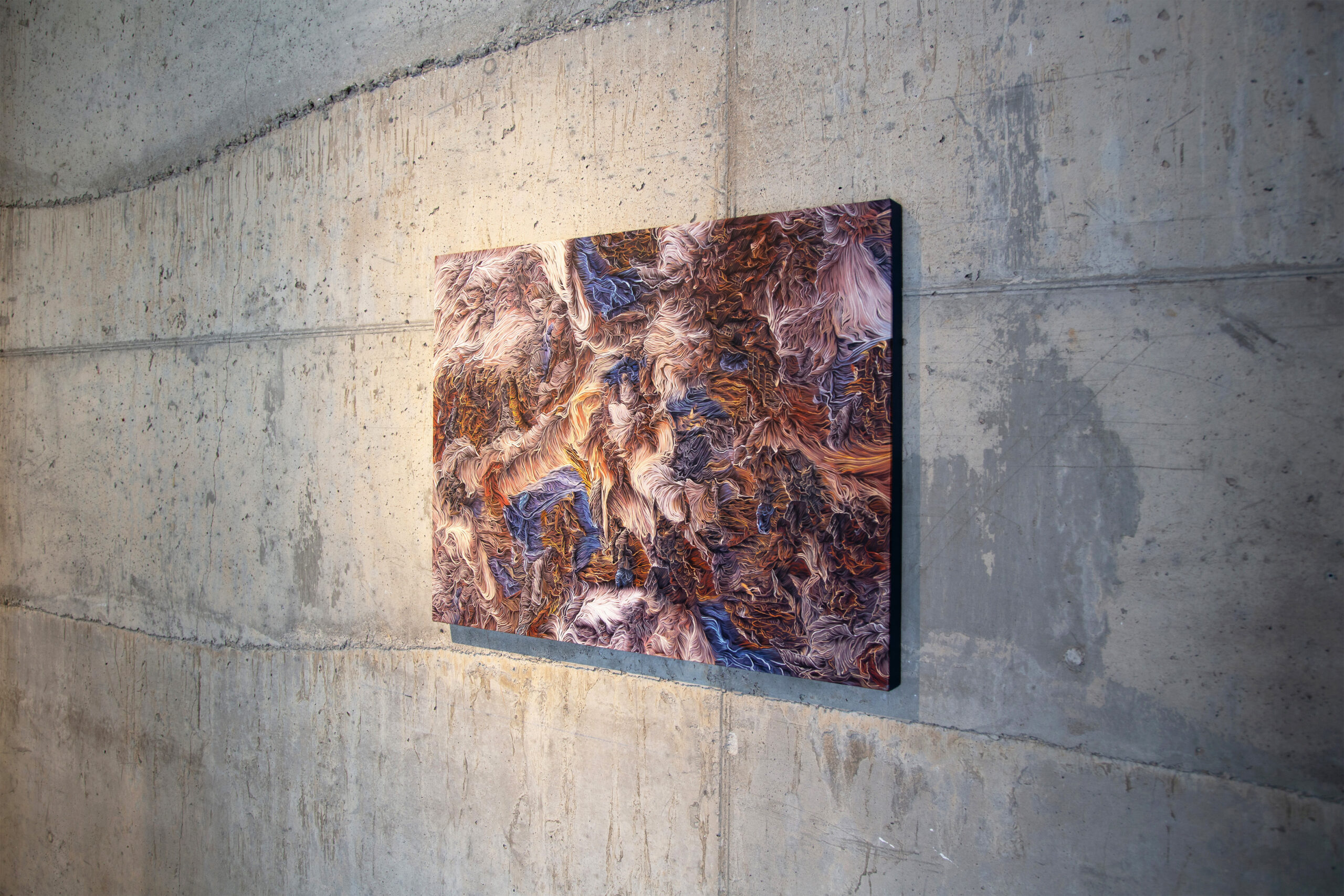
Mauro also exhibited Closed Heart Can’t See, an Oil on Canvas artwork from his Inscriptions on Canvas series. The series investigates dense accumulations of lines, folds and chromatic traces that appear to contain an obscure, indecipherable language. Like the other artworks presented from the exhibition, the painting exists between visibility and disappearance, revealing fragments that suggest seeing is not merely an optical act, but also an emotional and perceptual condition. When the heart is closed, the image remains present yet inaccessible, surviving as an affective trace that continues to shift and transform within the viewer’s memory.